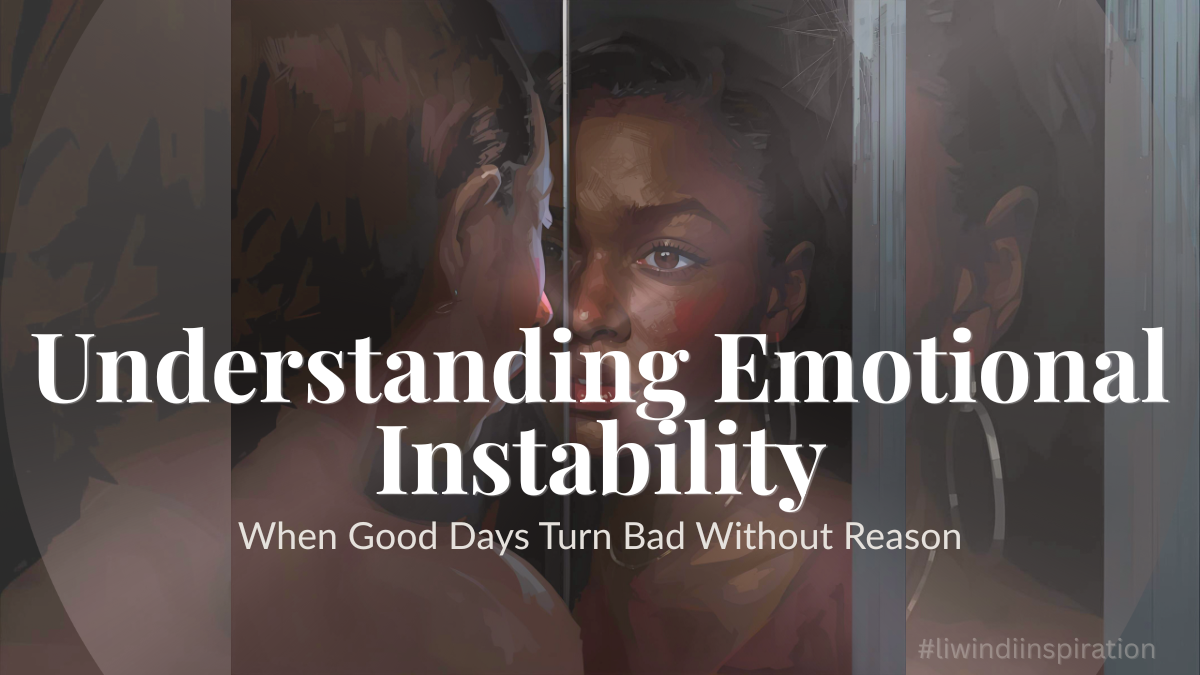
When Looking Fine Becomes a Mask: My Journey with Perfectly Hidden Depression
For years, I was the person who had it all together. Smiling, achieving, showing up; no matter how heavy the world felt inside. On the outside, I seemed fine. On the inside, I was quietly falling apart.
What I didn’t realize was that I was living with something called Perfectly Hidden Depression (PHD) — a silent storm that hides behind smiles and success. You can read my full story here: My Journey with Perfectly Hidden Depression.
I convinced myself that as long as I looked okay, I was okay. But one day, the mask slipped. The smallest thing shattered my calm, and suddenly, I couldn’t hold it together anymore. That was when I learned an uncomfortable truth: emotional instability doesn’t always look chaotic. Sometimes, it’s quiet, invisible, and exhausting.
The Pressure to Stay Perfect — and the Emotional Cost
Perfectionism can feel like protection, until it starts suffocating you. When your identity is built on composure and control, showing emotion feels like failure.
People with PHD often hide their pain behind competence and positivity. But repressing emotions doesn’t erase them; it stores them. Over time, that pressure turns into fatigue, irritability, or unexpected sadness.
Research shows that chronic emotional suppression raises cortisol levels, leading to stress-related mood swings and burnout.
“When perfectionism and depression combine, people can hide profound pain behind a mask of control and competence.” — Dr. Margaret Rutherford
💡 Try this: Notice when you say “I’m fine” automatically. Pause. Ask yourself what you’re really feeling. Small moments of honesty can release huge emotional pressure.
Understanding Emotional Instability: It’s More Than Just Mood Swings
Emotional instability isn’t about being overly dramatic. It’s about the mind struggling to regulate feelings consistently. One moment you’re calm, the next, you feel hollow — and you can’t pinpoint why.
When you suppress emotions for too long, they don’t vanish. They resurface unexpectedly, creating emotional “crashes.” Over time, your brain becomes hyper-reactive to even minor stress, making your mood feel unpredictable.
💡 Try this: Name your emotions out loud — even the messy ones. It helps your brain’s rational side step in, reducing emotional intensity.
When Good Days Collapse Without Warning
Ever had a day where everything was fine… until it wasn’t? That sudden emotional dip can feel like betrayal. You question yourself: What’s wrong with me? Why now?
The truth is, emotional crashes rarely need a big reason. Sometimes it’s exhaustion, hormonal shifts, or simply the weight of carrying too much for too long. According to the American Psychological Association, suppressed emotions often reemerge when the brain finally senses “safety,” which is why breakdowns often follow calm periods.
💡 Try this: When bad days come, don’t fight them. Rest, breathe, and remind yourself that emotions — like weather — always change. Storms don’t last forever.
The Science of Suppressed Emotions: What Happens Inside the Brain
When you hide emotions, your brain doesn’t forget. The limbic system, particularly the amygdala, stays active, releasing stress hormones that keep your body in a constant state of alert.
A Harvard Medical School study found that emotional suppression increases physiological stress and reduces resilience, meaning your emotional system tires out faster.
💡 Try this: Let emotions move through you, not around you. Cry, write, talk, move — release keeps the system balanced.
Breaking the Silence: How I Learned to Let the Cracks Show
For me, healing began the day I stopped pretending. I opened up to one person. Then another. I allowed myself to say, “I’m not okay right now.”
It felt raw, even shameful at first — but slowly, honesty became freedom. Each time I shared, the weight lifted a little more. Vulnerability didn’t make me weaker; it made me real.
💡 Try this: Make a “safe space” list — a few trusted people or outlets where you can drop the mask completely. Authenticity is emotional oxygen.
Choosing Self-Compassion Over Perfection
Recovery isn’t a straight line; it’s a spiral. Some days, I still struggle. But I’ve learned to stop demanding constant strength from myself.
Emotional instability doesn’t mean you’re broken — it means you’re human. You don’t need to be perfectly healed to be worthy of love, peace, or joy.
“Owning our story and loving ourselves through that process is the bravest thing we’ll ever do.” — Brené Brown
💡 Final takeaway: Healing begins when you stop asking, “Why am I like this?” and start whispering, “I’m doing my best.”
Author’s Note
If this post resonated with you, know that you’re not alone. Perfectly Hidden Depression affects countless people who appear strong on the outside but feel fragile within. Sharing my experience isn’t about having all the answers — it’s about reminding you that it’s okay to be human, to ask for help, and to let the mask slip once in a while.
— Joshua Liwindi
Leave a Reply